

Pillar guide
Hybrid yacht system architecture: The complete guide
How a hybrid-electric system is designed, what each component does, and why the architecture matters as much as the individual parts. Written by the engineers at JOOOL with 28 years of marine energy expertise and over 119 vessels delivered.
DEFINITION
What is a hybrid-electric yacht architecture?
A hybrid-electric yacht architecture is a system design that integrates electric energy storage, intelligent power management, and in some configurations, electric propulsion into a single, unified platform that works alongside or replaces conventional diesel systems.
The word ‘architecture’ matters here. It is not about adding a battery bank or swapping an engine. It is about how every energy source, every consumer, and every conversion stage on the vessel are connected, managed, and optimised as a whole. Done well, the result is a yacht that is quieter, more efficient, less dependent on fossil fuels, and significantly simpler to operate and maintain than a conventional installation.
JOOOL’s answer to this challenge is the OneBox a centralized, modular platform that acts as the brain and nervous system of the entire energy ecosystem onboard. It exists in two configurations, each designed for a different profile of vessel and use case.
CONFIGURATONS
Two configurations:
one platform
JOOOL's hybrid architecture comes in two distinct configurations. They share the same core platform, the same battery packs, the same EPMS software, and the same shipyard integration process. What differs is the propulsion layer and that difference defines which vessels and use cases each one serves.
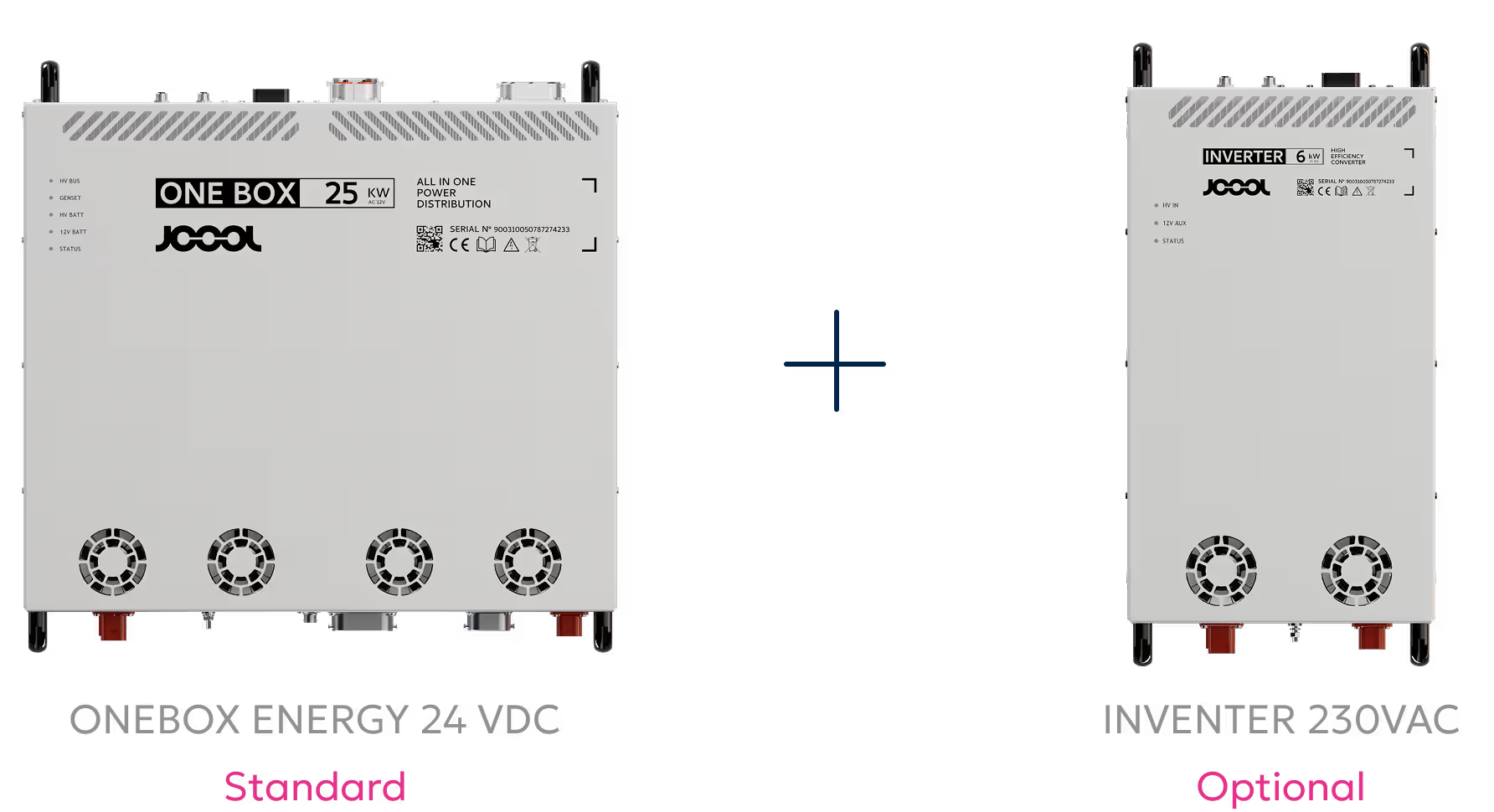
OneBox Energy : energy management and silent mooring
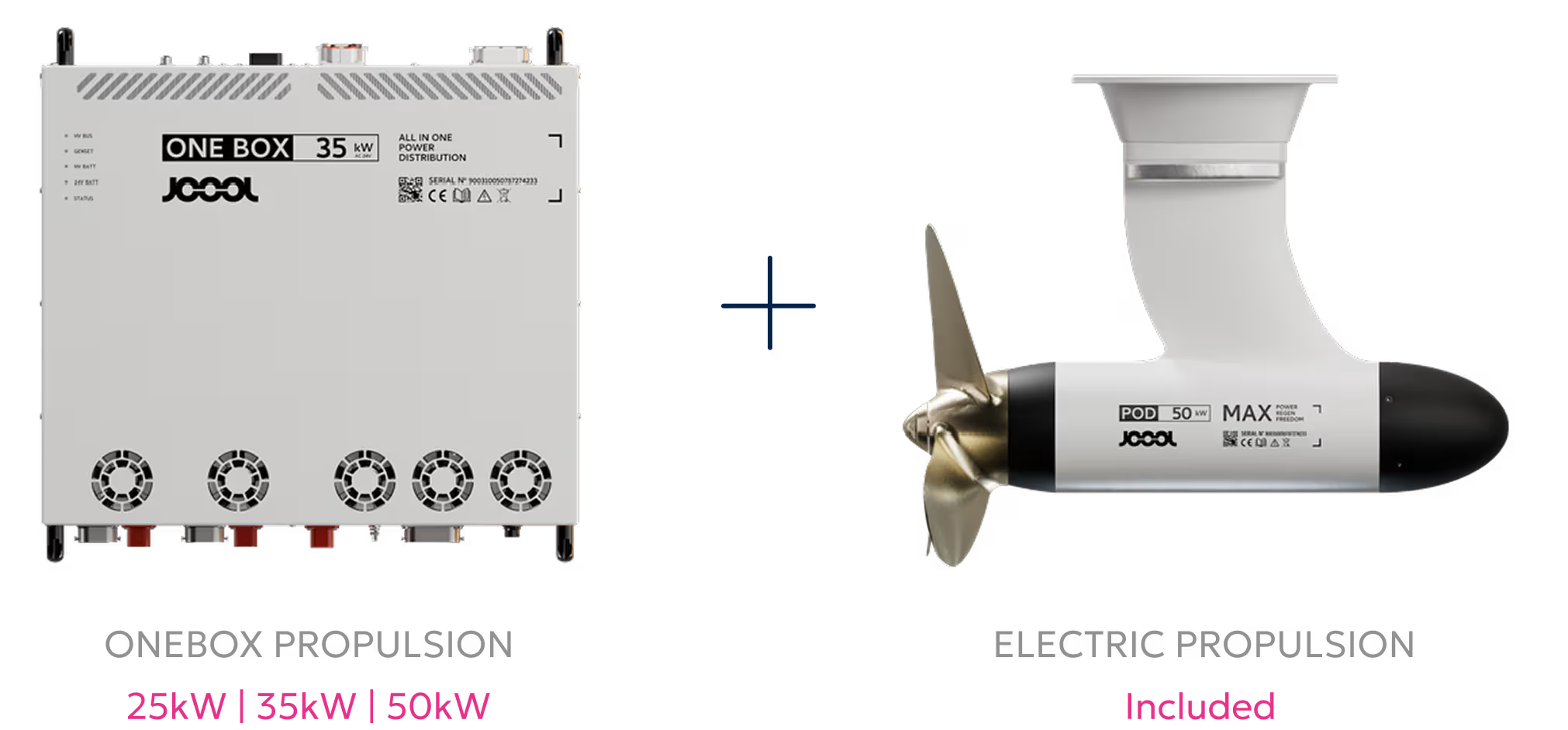
The OneBox Propulsion adds integrated electric drive to the energy management platform. Connected to the PowerPod direct-drive motor, it replaces the diesel engine entirely, delivering silent, instant-torque propulsion in harbour and regenerating electricity from the propeller while sailing. The complete hybrid-electric sailing experience.
- For all vessel sizes: 40 to 120 ft
- Retains existing thermal propulsion: no engine replacement
- Silent hotel loads at anchor: lighting, refrigeration, AC, watermaker
- Automated generator management: starts and stops based on battery state
- Solar and shore power inputs optimised simultaneously
- Up to 150 kWh battery storage per unit : up to 3 units in parallel
| Specifications | Value |
|---|---|
|
Input battery capacity
|
1 x 21kWh to 4 × 38 kWh |
|
Input battery charger [kW]
|
up to 2x6kW |
|
230V AC output
|
up to 3 X 6kW with external inverter |
|
BI directional DC/DC [A]
|
2 x 50A (24V) |
|
Input generator Voltage [VAC]
|
415-480 |
|
Weight [kg]
|
50 |
|
Dimensions LxHxD [mm]
|
700x700x282 |
|
Cooling
|
Air |
OneBox Propulsion : integrated electric drive
The OneBox Energy manages all onboard power, battery storage, solar input, shore charging, and generator management, while the vessel retains its existing thermal propulsion. Hotel loads run silently from battery storage at anchor and in harbour. The EPMS manages generator cycling automatically, minimising runtime and fuel consumption.
- For sailing yachts: 40 to 65 ft (monohull and catamaran)
- PowerPod replaces diesel engine : silent, zero-emission propulsion
- Hydrogeneration: recovers 2–5 kWh per hour at hull speed while sailing
- Instant torque from zero RPM : superior marina manoeuvring
- Automatic mode switching: electric drive, hydrogeneration, hybrid
- Shore power, solar, generator, and hydro all managed by the EPMS
| Specifications | 25kW | AC | 25kW | DC | 35kW | DC | 50kW | DC |
|---|---|---|---|---|
|
Battery voltage [VDC]
|
160 - 496 | 160 - 496 | 2×160 - 460 | 2×160 - 460 |
|
Propulsion drive [A]
|
60 | 60 | 90 | 120 |
|
230V AC output
|
6kW | - | up to 2x6kW with external inverters | up to 2x6kW with external inverters |
|
BI directional DC/DC [A]
|
50A (12V) | 50A (12V/24V opt) | 50A (24V) | 50A (24V) |
|
Genset input [VAC]
|
415–480 | 415–480 | 415–480 | 415–480 |
|
Weight [kg]
|
60 | 40 | 55 | 55 |
|
Dimensions LxHxD [mm]
|
680×700×280 | 680×430×280 | 700×700×280 | 700×700×280 |
|
Cooling
|
Air | Air | Air | Air |
CONFIGURATION
Choosing the right configuration
| Component | OneBox Energy | OneBox Propulsion |
|---|---|---|
|
Vessel size
|
40 to 120 ft | 40 to 65 ft sailing yachts |
|
Propulsion
|
Thermal (diesel retained) | Electric: PowerPod replaces diesel |
|
Silent mooring
|
Yes: full battery autonomy | Yes: full battery autonomy |
|
Silent motoring
|
No: diesel engine used | Yes: PowerPod electric drive |
|
Hydrogeneration
|
Not applicable | Yes: 2 to 5 kWh/h while sailing |
|
Typical battery bank
|
42 to 152 kWh | 27 to 76 kWh per hull |
|
Generator dependency
|
Low - automated management | Very low: hydro + solar + genset backup |
|
Ideal use profile
|
All sailing profiles, any size | Coastal cruising, liveaboards, charter |
|
Ideal vessel type
|
All sail + motor yachts | Production and custom sailing yachts |
|
Key benefit
|
Comfort + autonomy at anchor | Full silent sailing experience |
System
How the hybrid system works: energy flow explained
At the heart of every JOOOL installation is the OneBox the central node through which all energy flows pass. Every source feeds into it. Every consumer draws from it. The EPMS software manages the balance in real time, without any crew intervention.
The OneBox accepts input from four types of energy source, managed simultaneously and automatically:
- Shore power: AC input from marina connection (360–480 VAC, 50/60 Hz) via the PowerUp Charger. Charges batteries at up to 6.6 kW. Available whenever the vessel is berthed at a equipped marina.
- Solar panels: DC input from rooftop or bimini solar array via an MPPT controller. Contributes 1–5 kWh per day depending on installation size and sun conditions. Feeds the battery bank continuously during daylight.
- Generator set: AC input from onboard genset (up to 32 kW). The EPMS starts and stops the generator automatically based on battery state of charge typically running for a few hours per day or less. Compatible with standard 360–480 VAC generators.
- Hydrogeneration (OneBox Propulsion only): the PowerPod recovers kinetic energy from the sailing propeller, feeding 1.5 kWh per hour per PowerPod back into the battery bank at hull speed.
All input energy is stored in JOOOL's LiFePO4 Battery Packs available in 21, 27, 32 and 38 kWh modules, stackable up to 150 kWh per OneBox. The EPMS manages battery charging with precision: prioritising renewable sources, protecting against deep discharge, balancing cells, and monitoring temperature and health in real time.
The battery bank is the buffer that makes the entire system work absorbing solar and hydrogeneration as they arrive, delivering power on demand to propulsion and hotel loads, and allowing the generator to run at its optimal efficiency point rather than idling at partial load.
The OneBox distributes power to two categories of consumer:
• Hotel loads (12V or 24V, 230V AC): lighting, refrigeration, watermaker, air conditioning, navigation instruments, entertainment systems, galley appliances. Powered silently from battery storage : no generator required in most conditions.
• Propulsion (OneBox Propulsion only): the PowerPod draws from the battery bank for electric drive. The OneBox manages the high-voltage DC bus between battery and motor, ensuring stable power delivery at all throttle positions.
The EPMS (Energy and Propulsion Management System) is the software and hardware layer that coordinates all of this automatically. Built on over 150,000 hours of real-world operational data, it makes decisions every second: which source to prioritise, when to charge the battery, when to start the generator, when to switch propulsion modes. The crew experiences none of this complexity they see a single display showing battery level, power flow, and estimated autonomy.
System
The OneBox platform: modular, scalable, shipyard-ready
The OneBox is not a custom installation it is an industrialised platform. Pre-engineered, factory-tested, and designed for consistent integration across production runs. This is what distinguishes JOOOL from bespoke marine electrical projects: the engineering is done before the system reaches the yard, not on the boat.
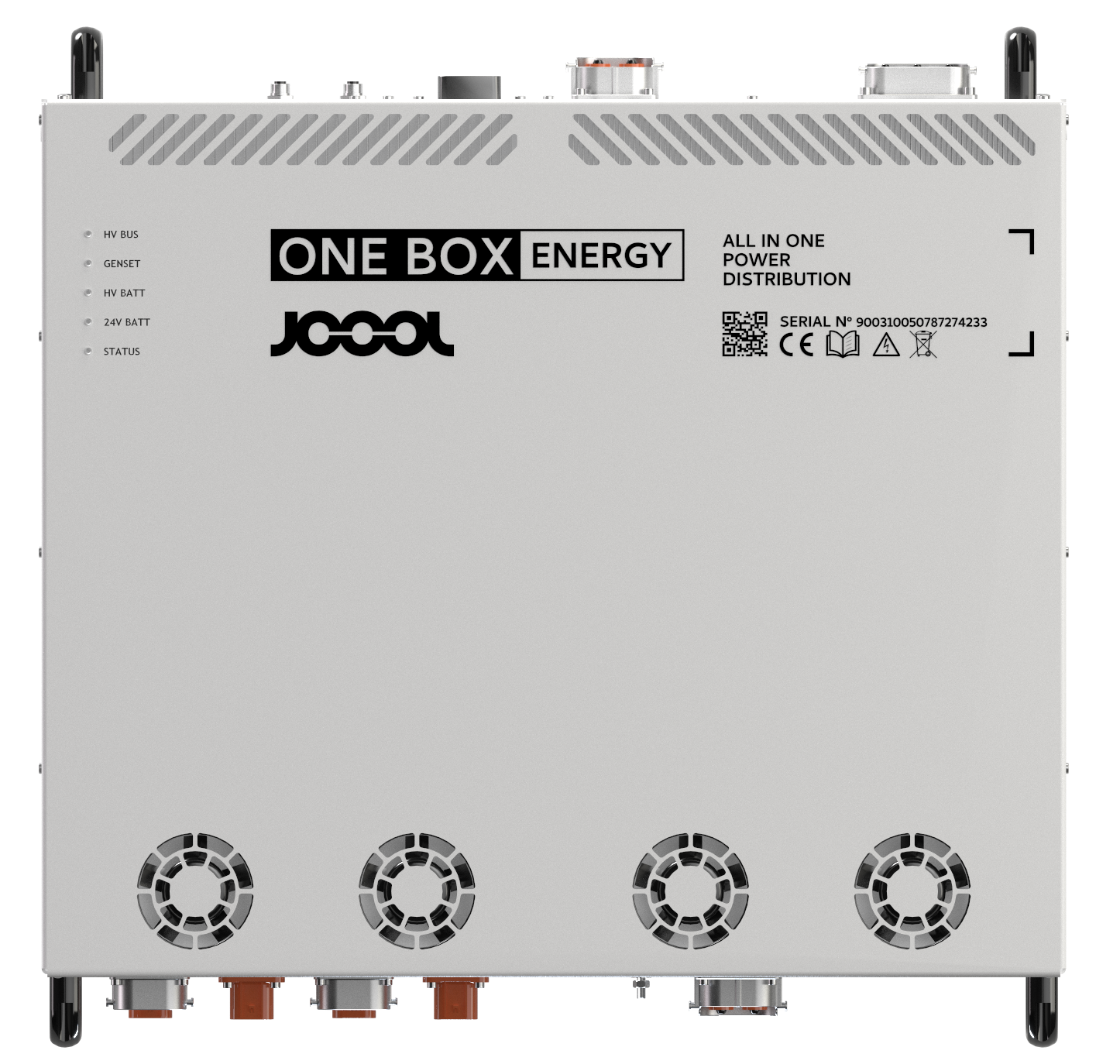
Every OneBox unit arrives pre-wired and factory-validated. On-site installation is reduced to mechanical mounting, final cable connections, and system commissioning. No specialist high-voltage electrical certification is required on site. For a shipyard building 20, 50, or 100 hulls per year, this standardisation reduces integration time per unit and eliminates the variability that comes from bespoke on-site electrical work.
The OneBox architecture scales in two dimensions. Vertically: battery capacity scales from 21 kWh (one pack) to 150 kWh (four packs in parallel) per OneBox unit. Horizontally: up to three OneBox units can run in parallel on the same vessel, for total system capacities up to 450 kWh and combined AC output up to 18 kW. This makes the same platform viable for a 45-foot production catamaran and a 90-foot custom cruiser.
The OneBox is built to the same standards as commercial marine power systems — not consumer electronics adapted for boats. Redundant control logic. Thermal management tested for continuous duty in tropical conditions. HVIL (High Voltage Interlock Loop) and IMD (Insulation Monitoring Device) safety systems as standard. IP68/IP69 rated connectors throughout. Rated for continuous duty in the vibration, humidity, and temperature cycling of real-world marine operation.
| Specifications | OneBox Energy | OneBox Propulsion (25 kW AC) | OneBox Propulsion (50 kW AC) |
|---|---|---|---|
|
Battery voltage
|
160–496 VDC | 160–460 VDC | 2 × 160–460 VDC |
|
Battery capacity (max)
|
4 × 38 kWh = 152 kWh | 2 × 38 kWh = 76 kWh | 2 × 38 kWh = 76 kWh |
|
Propulsion output
|
None | 25 kW AC | 50 kW DC |
|
Shore power input
|
12 kW | 6 kW | 6 kW |
|
Genset compatibility
|
360–480 VAC / up to 32 kW | 360–480 VAC | 360–480 VAC |
|
230V AC output
|
3 × 6 kW (external inverters) | 6 kW max | 2 × 6 kW max |
|
DC service output
|
24V / 2 × 50A | 12V or 24V / 50A | 24V / 50A |
|
Units in parallel
|
Up to 3 | Up to 2 (catamaran) | Up to 2 (catamaran) |
|
Weight
|
64 kg | 60 kg | 55 kg |
|
Cooling
|
Air | Air | Air |
Technology
Renewable energy integration: solar and hydrogeneration
The hybrid architecture is at its most powerful when renewable sources are fully integrated. Solar and hydrogeneration do not just reduce generator runtime they change the fundamental economics and experience of ocean cruising.
Solar integration
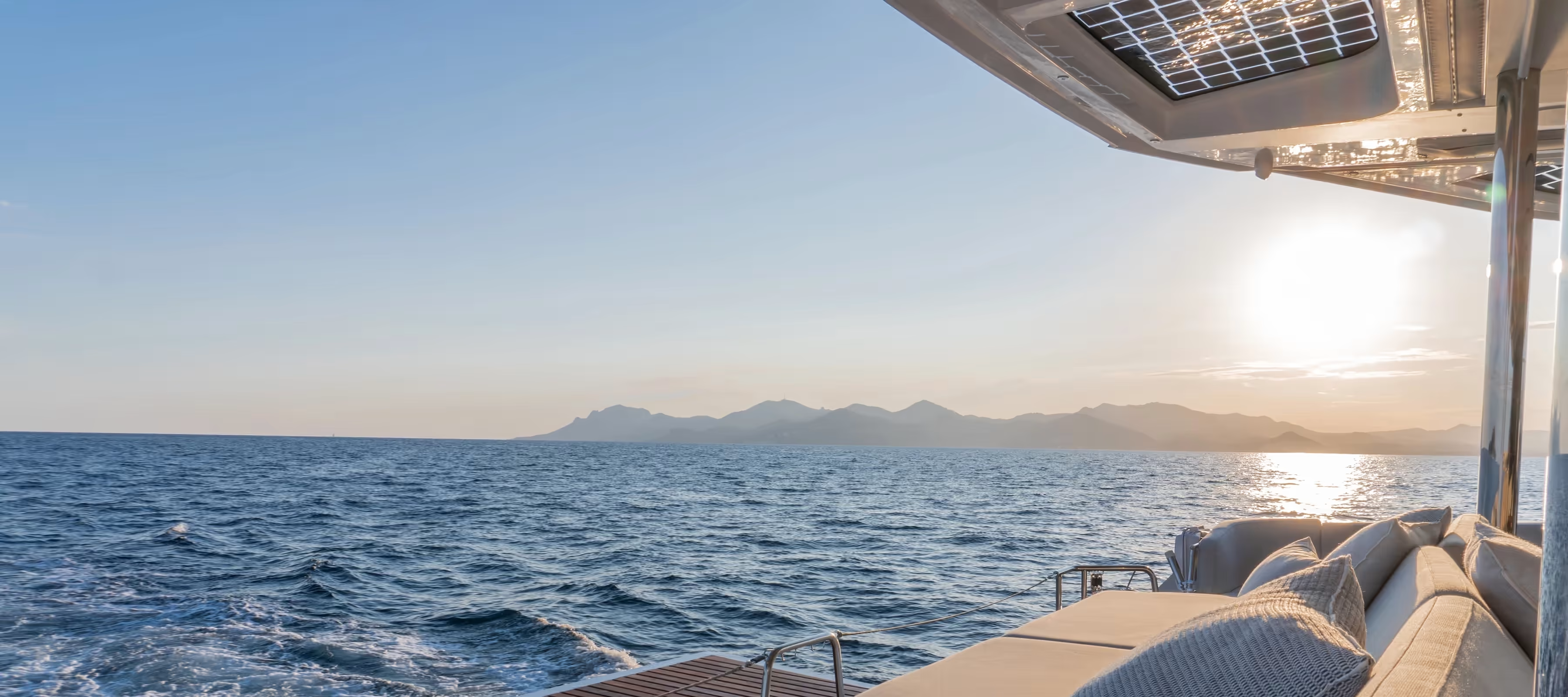
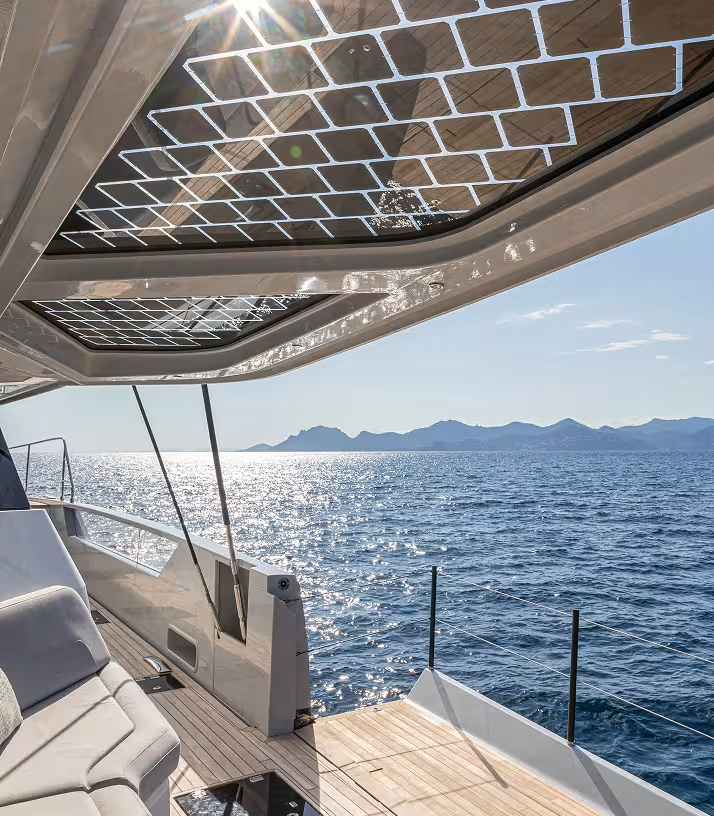
The OneBox accepts solar DC input via MPPT controllers typically yielding 1 to 5 kWh per day depending on panel area and geography. On a catamaran with a well-designed bimini solar array, solar alone can cover the baseline hotel load during daylight hours in summer latitudes,
with the battery bank absorbing surplus for overnight use. The EPMS tracks solar yield in real time and factors it into battery management decisions.
Hydrogeneration: energy recovery under sail
In the OneBox Propulsion configuration, the PowerPod operates as a generator whenever the vessel is sailing with the propeller freewheeling. At 6–7 knots, a single PowerPod recovers approximately 1.5 kWh per hour.
On a twin-engine catamaran, this doubles to approximately 3 kWh per hour enough to cover most hotel loads entirely during a good sailing day and contribute meaningfully to battery recharge.
This is the feature that changes the energy arithmetic completely. A catamaran sailing 8 hours a day at 7 knots recovers approximately 24 kWh from hydrogeneration more than the entire battery capacity of a typical 27 kWh installation. Combined with solar, it is common for JOOOL-equipped catamarans on Mediterranean passages to run the generator less than 2 hours per day, or not at all.
QUESTIONS
Everything you want to know
OneBox Energy manages onboard power, battery storage, solar, shore power, and generator, for vessels that retain their existing thermal propulsion. It covers all vessel sizes up to 120 ft. OneBox Propulsion adds integrated electric drive via the PowerPod: the diesel engine is replaced entirely by silent electric propulsion. This configuration is designed for sailing yachts from 40 to 65 ft.
A central OneBox unit connects all energy sources shore power, solar panels, generator, to a battery bank and all onboard consumers. The EPMS software manages all flows automatically. In the Propulsion configuration, the PowerPod motor connects to the OneBox and receives high-voltage DC power for propulsion and feeds current back during hydrogeneration.
Yes, in many real-world scenarios. On passages with good solar and regular hydrogeneration, JOOOL-equipped catamarans routinely operate for days or weeks without starting the generator. It remains available as a backup but is used occasionally rather than as a daily necessity which is exactly the point.
Yes. Up to three OneBox units can run in parallel, each supporting up to 150 kWh of battery storage. The OneBox Energy configuration covers vessels up to 120 ft. For very large custom builds, JOOOL's engineering team designs bespoke configurations based on the same modular platform.
No. The OneBox is pre-engineered and factory-tested before delivery. All power conversion and control functions are centralised in the unit installation requires no specialist high-voltage certification on site. This is one of the primary reasons production shipyards choose JOOOL.
