

The complete guide
Yacht electrification: Hybrid & Electric systems for modern yachts
Everything you need to know about electrifying a yacht : from propulsion architecture and energy storage to power management and shipyard integration. Whether you’re a boat owner exploring hybrid systems or a shipyard integrating electric drive at scale, this guide covers the full picture.
Definitionort
What is yacht electrification?
Yacht electrification refers to the integration of electric or hybrid-electric propulsion and energy management systems into sailing and motor yachts. Unlike fully diesel-powered vessels, an electrified yacht uses one or more electric motors for propulsion, a high-capacity battery bank for energy storage, and a centralized energy management system to coordinate all power flows onboard : propulsion, hotel loads, renewable sources, and generator backup.
The spectrum runs from partial hybridization, where an electric motor supplements a diesel engine and a battery bank reduces generator use, to fully electric configurations where batteries, solar panels, and hydrogeneration cover all energy needs.
In practice, the hybrid-electric architecture is the dominant choice for production and cruising yachts from 40 to 120 feet. The OneBox Energy system provides large-capacity battery storage for silent mooring and autonomous energy management, while retaining the existing thermal propulsion. The OneBox Propulsion adds integrated electric drive, covering sailing yachts from 40 to 65 feet. Both systems eliminate reliance on the generator and reduce noise and emissions onboard : OneBox Propulsion goes further by replacing diesel drive with silent electric thrust. JOOOL’s OneBox platform is built specifically for this architecture.
Benefits
Why electrify your yacht?
From production sailboats and catamarans to custom yachts, JOOOL systems are proven across a wide range of hull types, sizes, and sailing profiles. Each integration is tailored, each system is tested.
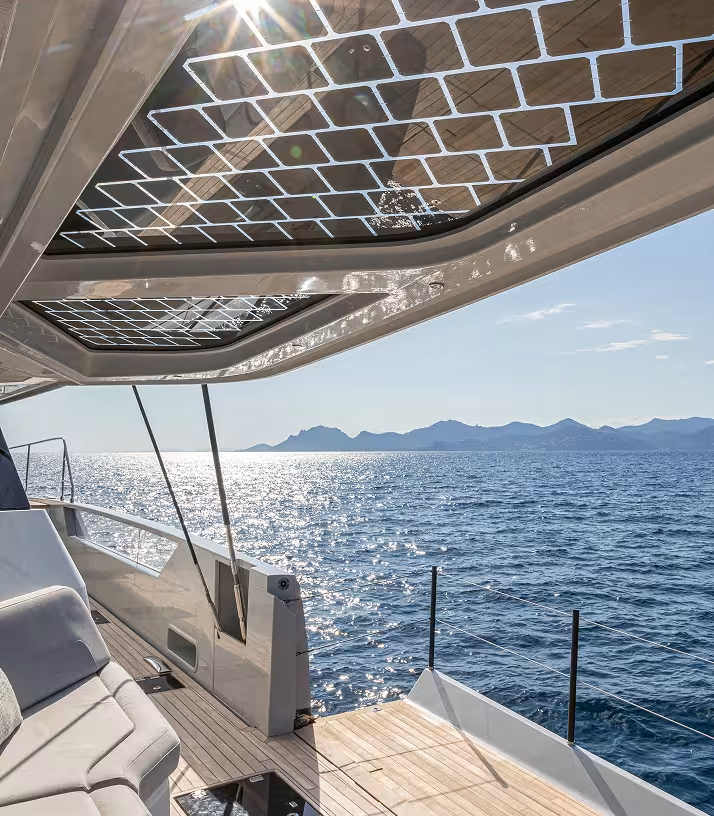
At anchor, most conventionally powered yachts run a generator for hours every day : for refrigeration, watermaking, charging, and air conditioning. That generator produces noise, vibration, and exhaust that affects the entire boat and its neighbours. A JOOOL-equipped yacht runs all these loads silently from battery storage, without starting the generator. No background hum, no vibration through the hull, just the sound of the sea.
In a marina, electric propulsion eliminates the diesel exhaust and noise that makes berthing unpleasant for crew and neighbours alike. And in protected coastal zones and marine reserves : where restrictions on diesel engines are increasingly common, electric drive is often the only option.
High-capacity energy storage means you can run the galley, laundry, air conditioning, and navigation systems from batteries for extended periods, recharging through solar panels during the day and hydrogeneration while sailing. Many JOOOL equipped yachts reach fully energy-autonomous profiles on typical Mediterranean or Caribbean itineraries, with the generator as a rarely-used backup rather than a daily necessity.
Electric propulsion eliminates gearboxes, reduces moving parts, and cuts maintenance requirements significantly. Battery packs have no service intervals. Electric motors have no oil changes, no impeller replacements, no exhaust system maintenance.
For charter operators and shipyard warranty programmes, the reduction in maintenance calls and engine-related warranty claims represents a measurable cost saving over a fleet's lifetime.
For yards integrating hybrid systems into series production, electrification has become a genuine differentiator in a competitive market. Buyers who prioritize comfort, sustainability, and lower running costs are actively seeking out hybrid models : and the major yards have responded. Fountaine Pajot, Leopard Catamarans, Dufour, Jeanneau, and Excess have all integrated JOOOL systems into production lines, responding to demand that shows no sign of slowing.
System
The four pillars of a complete electrification system
A complete yacht electrification system integrates four interdependent subsystems. Each can be optimized individually, but their real value comes from working together within a unified architecture, which is exactly what JOOOL's OneBox platform delivers.
The motor or motors that drive the vessel through the water. In a direct-drive configuration, the electric motor connects directly to the propeller shaft, no gearbox, no mechanical losses, no vibration. JOOOL's PowerPod is available in 25, 35 and 50 kW variants, covering monohulls and catamarans from 40 to 65 feet. At over 93% efficiency and rated for more than 100,000 hours of operation, it is one of the most reliable electric drives in production yachting. Key capability: hydrogeneration. When sailing, the spinning propeller generates electricity, recovering energy that would otherwise be lost and recharging the batteries automatically.
The battery bank that stores energy for propulsion and hotel loads. JOOOL Battery Packs use Lithium Iron Phosphate (LiFePO₄) chemistry : the safest, most cycle-stable chemistry available for marine applications. Available in 21, 27, 32 and 38 kWh modules, scalable up to 150 kWh per OneBox unit. Each pack is IP65-rated, includes an integrated BMS, automatic fire suppression at 80°C, and a 7-year guarantee. Sizing the battery bank correctly for a given vessel and use profile is one of the most critical decisions in any electrification project. JOOOL's engineering team provides system sizing support as part of every integration.
The software and hardware layer that coordinates all energy flows onboard : inputs from shore power, solar, generator, and hydrogeneration; outputs to propulsion, hotel loads, and battery charging; optimization between all sources in real time. JOOOL's EPMS is the brain of every system. Trained on over 150,000 hours of real-world data, it automatically prioritizes renewable sources, predicts energy needs, and minimizes generator runtime. The EPMS communicates via CAN 2.0A with all components, integrates with B&G and standard marine displays, and supports remote over-the-air software updates, so the system improves over time without requiring an engineer visit.
The overall system design that connects propulsion, storage, power management, generation, and consumption into a coherent whole. The JOOOL OneBox centralizes all conversion, distribution, and control functions in a single modular unit. Available in two configurations: OneBox Energy, which delivers large-capacity battery storage for silent mooring and generator-free autonomy; and OneBox Propulsion, which adds integrated electric drive for silent, instant-torque propulsion on sailing yachts up to 65 feet. Both transform a complex multi-component system into a standardized, plug-and-play platform.
Choice
Full electric vs hybrid : which architecture is right for your yacht?
This is the question most boat owners and shipyards arrive at first, and it deserves a clear, honest answer. The choice between full electric and hybrid-electric depends on three main variables: vessel size and weight, typical use profile, and availability of shore power or renewable energy along usual routes.
Full electric, when it makes sense
A fully electric vessel, running on batteries alone, recharged by solar or shore power, is the natural choice for inland waterway use: lakes, rivers, and canals where distances are short, charging infrastructure is accessible, and noise and emission restrictions are often the primary driver. Day boats, electric launches, and river cruisers operating within a defined area thrive on pure electric power.
On open water, coastal sailing, offshore passages, or extended blue-water cruising, the equation changes. Distances are longer, charging infrastructure scarce, and weather unpredictable. Full electric autonomy in these conditions requires very large, very heavy battery banks that add cost and weight without fully solving the range question. That is where hybrid-electric becomes the right answer.
Hybrid-electric : the architecture JOOOL is built for
The hybrid-electric configuration gives you the primary experience of electric propulsion: silence, instant torque, emission-free harbour manoeuvring, while retaining a thermal backup that activates only when needed. In practice, on a well-configured hybrid yacht, the thermal backup may run for only a few hours per week, and often less.
This is the architecture JOOOL’s OneBox was designed to optimize. The system automatically manages the transition between electric and hybrid modes based on battery state of charge, power demand, and available renewable inputs, without any manual intervention from the crew. You sail electric by default. The system handles everything else.
| Criteria | Full electric | JOOOL hybrid-electric |
|---|---|---|
|
Offshore range
|
Limited by battery capacity | Unlimited : diesel backup on demand |
|
Hotel load autonomy
|
Depends on solar / shore power | High : batteries + generator standby |
|
Noise at anchor
|
Silent | Silent (generator off by default) |
|
Harbour manoeuvring
|
100% electric, silent | 100% electric, silent |
|
Renewable recharging
|
Solar + hydrogeneration | Solar + hydrogeneration + genset |
|
Ideal vessel size
|
Under 45 ft, coastal use | 40–120 ft, all profiles |
|
Maintenance
|
Lowest | Very low |
|
Shore power dependency
|
High | Low to moderate |
Operation
How a hybrid-electric yacht system works
At the heart of every JOOOL system is the OneBox : the central intelligence that connects all energy sources and all energy consumers aboard the vessel. Here is how the system operates across the three main sailing scenarios.
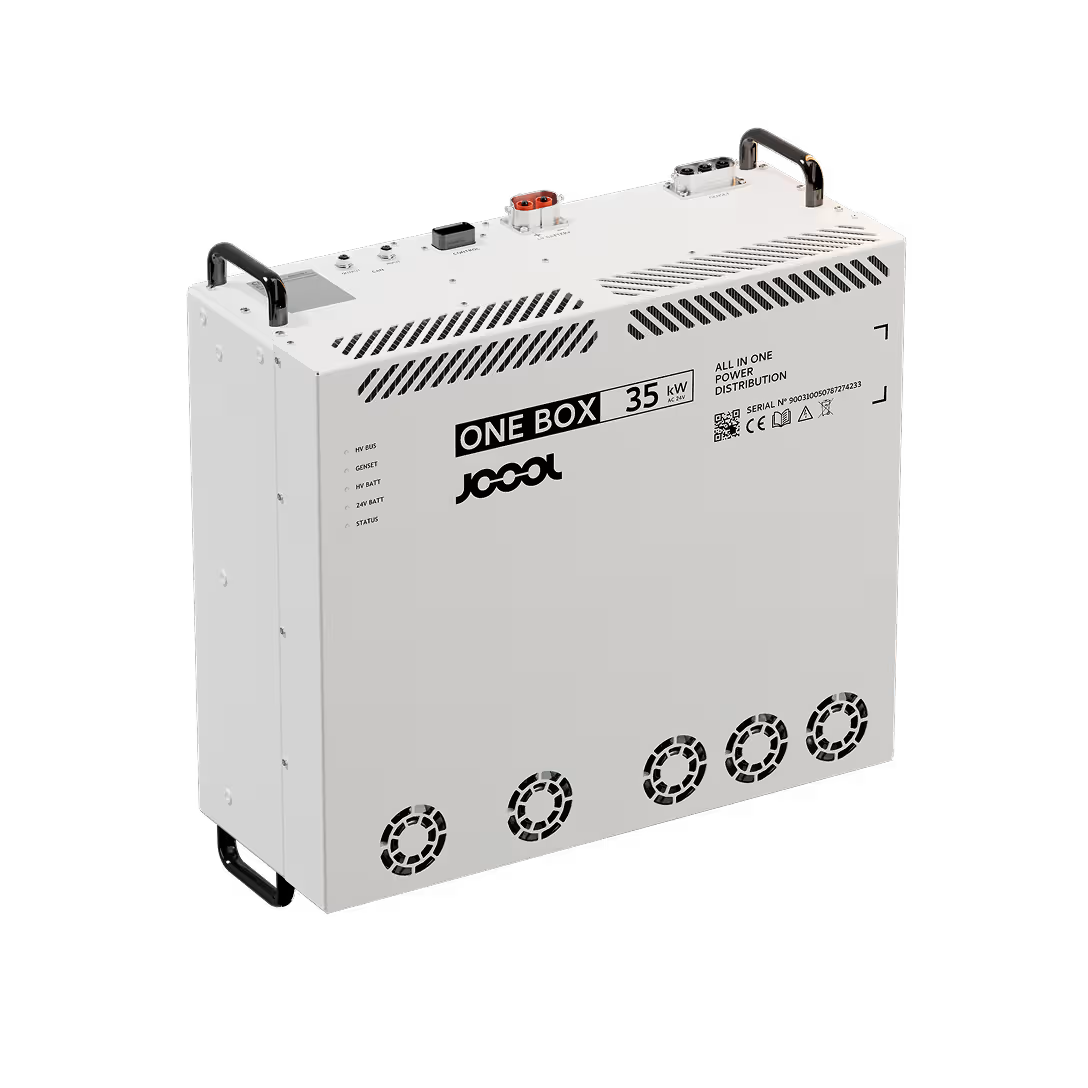
The OneBox draws from the battery bank to power all hotel loads : refrigeration, lighting, water heating, air conditioning, navigation instruments. Shore power (if available) charges the batteries silently through the PowerUp Charger. Solar panels contribute during daylight. The generator stays off. Crew and guests experience complete silence.
As battery state of charge drops toward a configurable threshold (typically 30–40%), the EPMS starts the generator automatically, charges the batteries to the optimal level, then shuts it down again, without any crew intervention.
When sailing at hull speed, the rotating propeller acts as a hydrogeneration turbine. The PowerPod operating in generator mode converts the propeller's rotation into electricity, feeding current back into the battery bank through the OneBox. On a catamaran at 7–8 knots, hydrogeneration recovers 2–5 kWh per hour, enough to significantly extend battery autonomy between charges.
Solar panels continue charging during daylight. The EPMS coordinates both inputs and optimizes battery charging throughout the passage.
When there is no wind or when precision manoeuvring is required, the OneBox switches to propulsion mode. The PowerPod draws from the battery bank and delivers instant, silent electric drive. In hybrid mode, if battery charge is low, the generator runs simultaneously: charging the battery and powering propulsion in parallel, at the generator's optimal efficiency point.
The transition between modes is automatic and seamless. The crew operates a single JOOOL hybrid throttle, no mode switching, no manual energy management required.
Proven on 119 vessels
JOOOL : proven on 119 vessels, across every ocean
JOOOL is the yachting brand of Alternatives Energies, founded in 1997 in La Rochelle, France. Over 28 years, our parent company has delivered more than 119 vessels across Europe and beyond, accumulating over 1 million hours of field operation. Every JOOOL product is refined by this real-world experience : not designed in a laboratory, but built on operational feedback from vessels at sea.
The EPMS software is built on more than 300,000 hours of logged operational data. The PowerPod direct-drive motor has been validated for over 100,000 hours of continuous operation. The OneBox architecture has been integrated without structural modification into monohulls, catamarans, and custom builds from 40 to 80 feet.
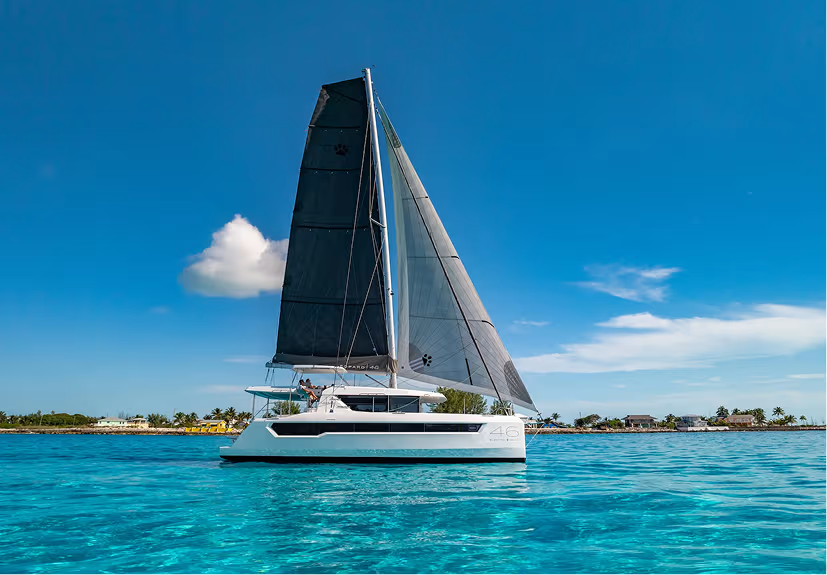
HYBRID LEOPARD 46
- 2 x 25 kW Electric Drive
- 2 × 32 kWh Battery Pack
- 14 kW Genset
Silent electric cruising in harbour, instant torque for tight manoeuvres, full energy self-sufficiency under sail. The JOOOL system transforms the Leopard 46 into a genuinely hybrid-electric catamaran.
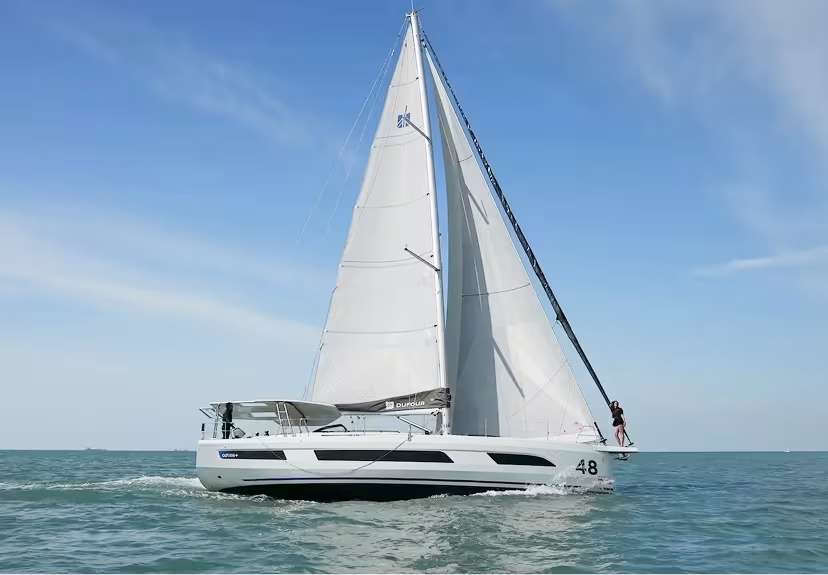
HYBRID DUFOUR 48
Long-range hybrid monohull
- 25 kW Electric Drive
- 32 kWh Battery Pack
- 14 kW Genset
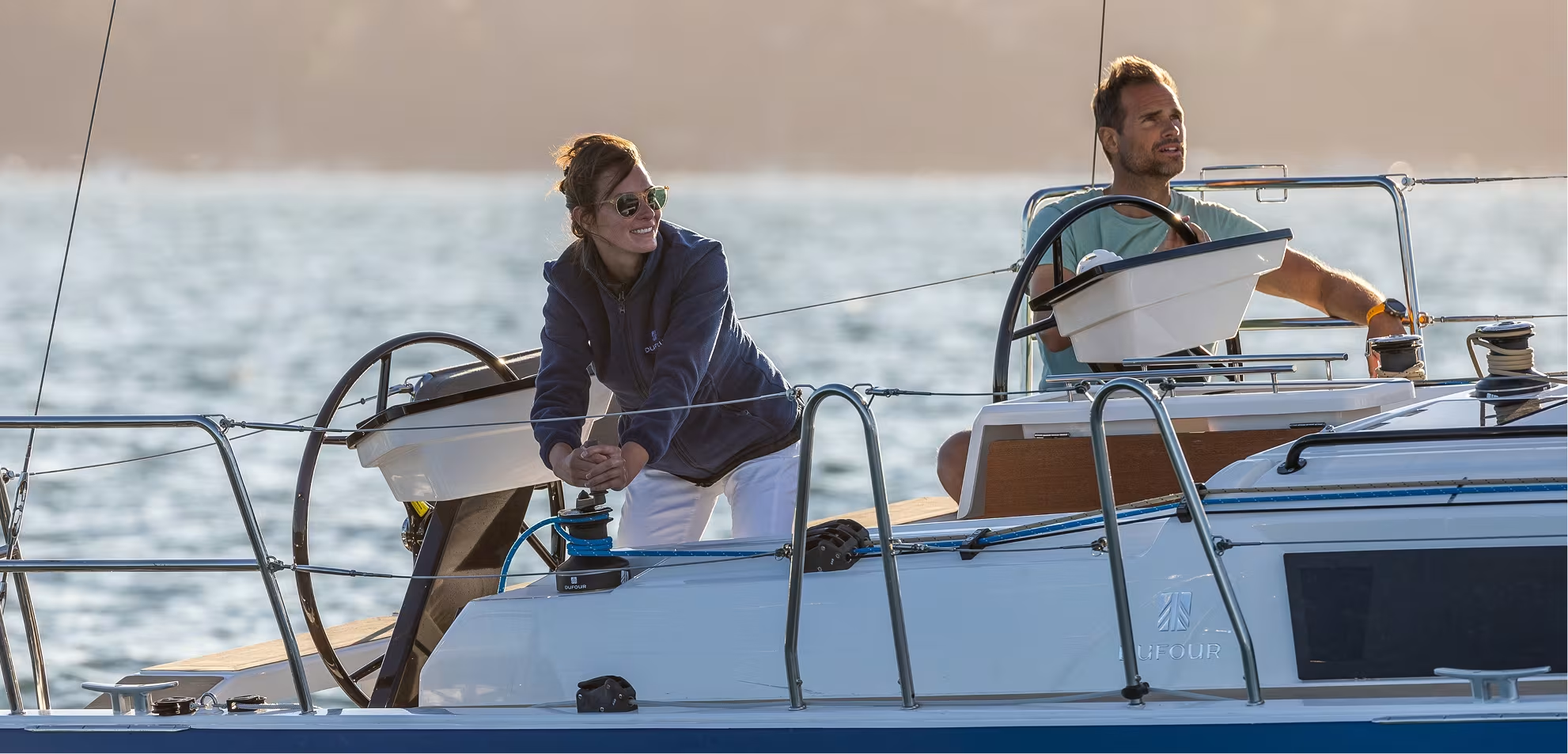
Built for extended ocean passages, the Dufour 48 with JOOOL runs all hotel loads silently from battery storage, motors emission-free in port, and recharges through solar and hydrogeneration at sea.
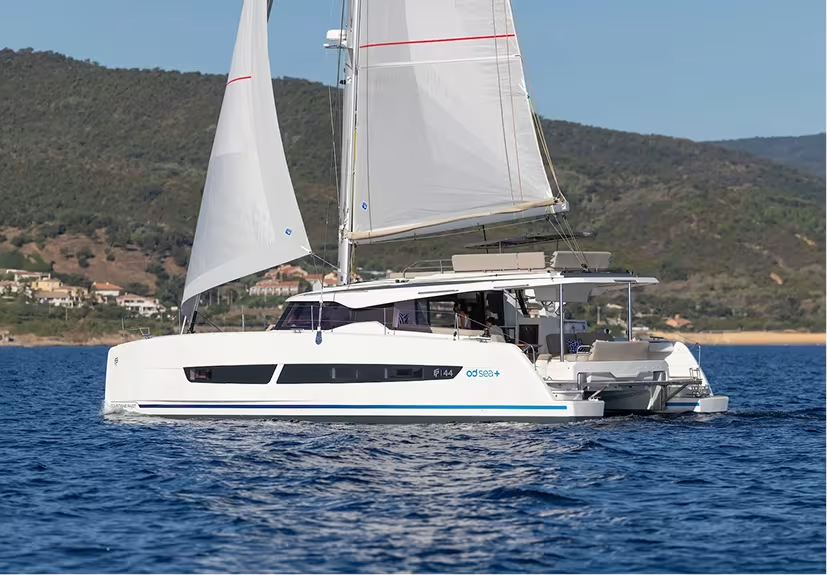
HYBRID FOUNTAINE PAJOT FP44
Refined approach to hybrid cruising
- 2 x 25 kW Electric Drive
- 2 x 27 kWh Battery Pack
- 14 kW Genset
Integrated with the JOOOL hybrid electric solution, the FP44 benefits from advanced energy management, electric propulsion, and optimized energy production.
Process
The JOOOL integration process
Whether you are a shipyard integrating JOOOL systems into a new production model, or a boat owner upgrading an existing vessel, the process follows the same four phases: engineered for efficiency, consistency, and peace of mind.
-
01
System design & sizing
JOOOL's engineering team reviews your vessel's hull form, engine room layout, and energy profile and specifies the right configuration: OneBox variant, PowerPod size, battery capacity, charger, and ancillaries. For production integration, this phase includes a review of the existing electrical architecture and a proposal for standardized integration across the model range.
-
02
Factory pre-assembly & testing
Components are pre-assembled and tested at the JOOOL factory before shipping, so installation on the vessel is faster and the system arrives validated.
-
03
Installation & commissioning
JOOOL technicians or certified partner engineers commission the system on site: activation, EPMS calibration, display configuration, and a full functional test across all operating modes. For production integration, JOOOL trains the yard's technical team to handle commissioning independently on subsequent units.
-
04
After-sales & remote monitoring
The EPMS provides continuous remote monitoring of system health, battery state, and energy flows. Over-the-air software updates keep the system optimized. Battery packs are guaranteed for 7 years, with individual cell replacement available after 10 years at approximately 30% of the cost of a full swap.
QUESTIONS
Everything you want to know
Yes. JOOOL systems are designed to integrate without structural modification, compatible with most production monohulls and catamarans from 40 to 65 feet, with the OneBox Propulsion system and PowerPod replacing the diesel drive. For vessels of any size up to 120 feet that want large-capacity battery storage and silent mooring without electric propulsion, the OneBox Energy is the right configuration. In both cases, the PowerPod is installed in place of, or alongside, the existing diesel drive. JOOOL's engineering team assesses each vessel individually to confirm compatibility and specify the right configuration.
Ready to electrify your yacht?
Whether you're a shipyard integrating hybrid systems into a production range, or a boat owner looking to upgrade, the right configuration depends on your vessel, your usage and your goals.
For shipyards & professionals
Integration specs, certification support, commissioning timeline and production line compatibility.
For boat owners & sailors
System sizing, compatible models, storage capacity and retrofit options for your vessel.
