

Electric manoeuvrability
Instant torque for total precision
The most demanding moments in sailing are not offshore. They are in harbour : backing into a narrow berth with a crosswind, manoeuvring past moored boats in a tight anchorage, holding position against a current. These are the moments where diesel propulsion is at its least precise. Electric drive delivers full torque instantly, in both directions, with no lag between throttle input and propeller response.
Performance
How electric propulsion changes low-speed handling
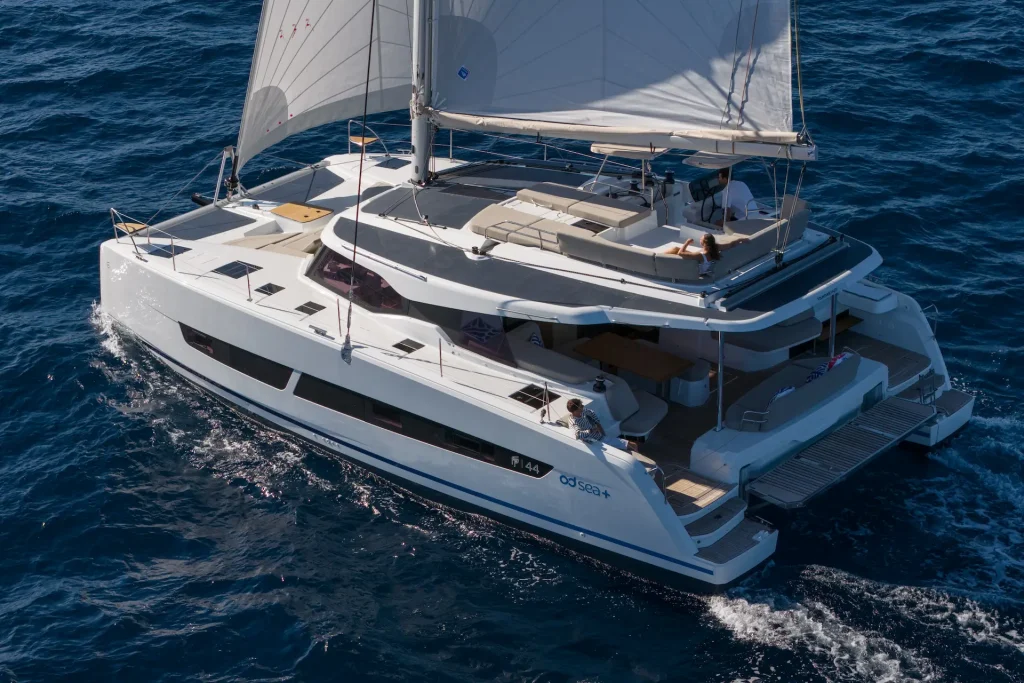
Instant torque: the fundamental difference
A diesel engine produces maximum torque at a specific RPM range : not at zero. When you advance the throttle from neutral, the engine must spool up, the gearbox must engage, and the propeller must overcome its own inertia before the boat starts to move. This lag, typically 1 to 2 seconds, makes precise low-speed manoeuvring difficult. You are always predicting where the boat will be, not responding to where it is.
An electric motor produces maximum torque at zero RPM. The moment you move the throttle, the motor responds: linearly, immediately, proportionally. You can apply 10% thrust, 50% thrust, or 100% thrust with equal precision. You can reverse direction without waiting for anything to change state. You are in control of the boat at every moment, not managing the lag of a mechanical system.
Advantage
The catamaran advantage: differential thrust
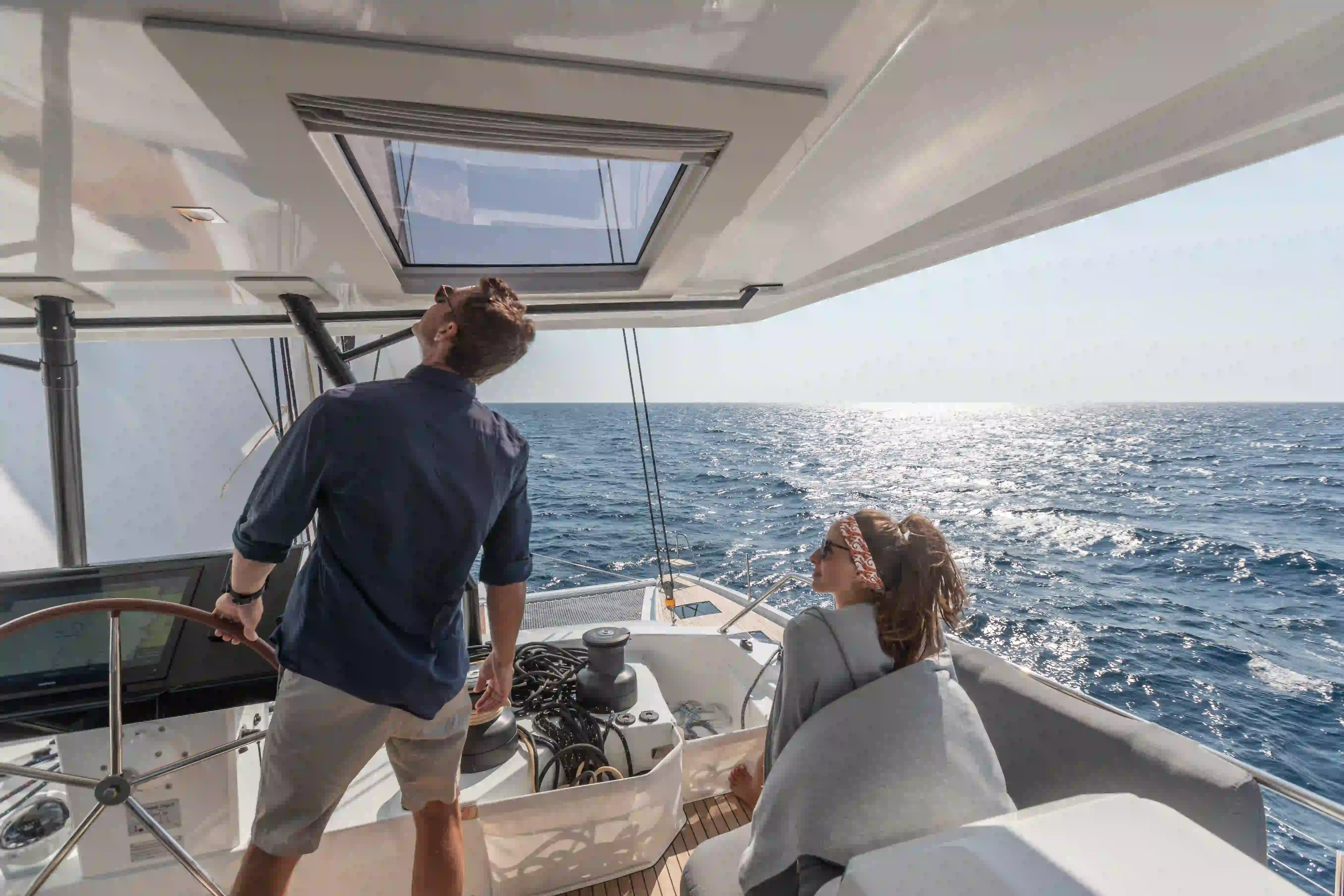
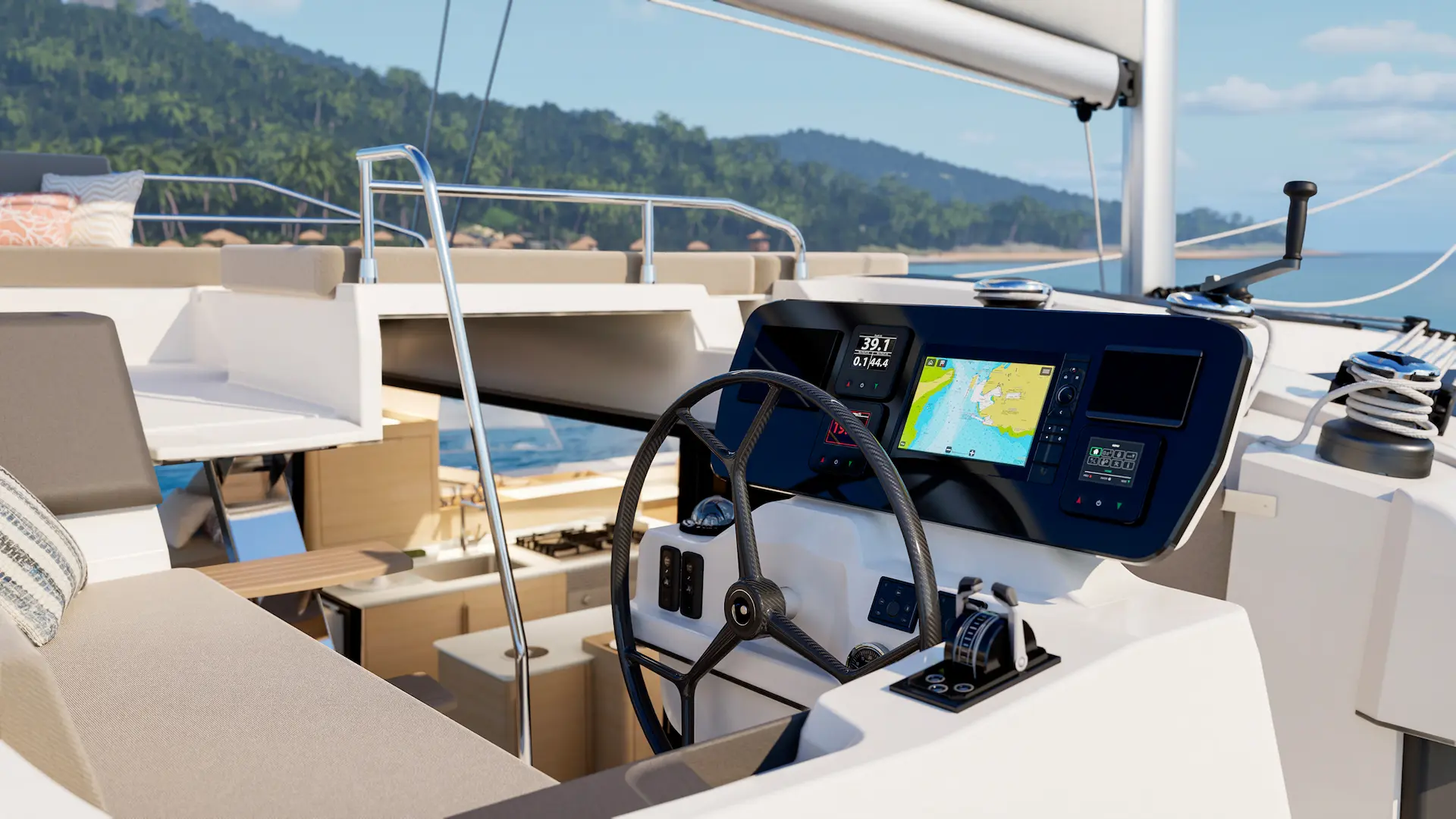
What differential thrust delivers in practice:
The handling advantage of electric propulsion is most dramatic on catamarans, and specifically on twin-engine catamarans where each hull carries an independent PowerPod.
With two independent electric motors, differential thrust becomes a precise, intuitive tool. Apply full ahead on the starboard pod and full reverse on the port pod, and a 50-foot catamaran rotates almost in place, pivoting around its own centre with very little forward or aft movement. This manoeuvre, which requires significant skill and ideal conditions with conventional diesel twin-screw installations, becomes routine with electric drive.
spin the catamaran 180 degrees in its own length in a tight marina : no bow thruster required
advance both motors at different speeds to track sideways into a berth
real-time correction without over-correcting : electric response is fast enough to feel like natural balance
one person on the helm, instant control, no reliance on crew on the foredeck
full reverse from cruising speed in under 2 boat lengths : significantly shorter than any diesel equivalent
THROTTLE
JOOOL throttle, designed for precision
The JOOOL Hybrid Throttle is designed specifically for electric and hybrid propulsion. Single lever for monohulls, dual independent levers for catamarans. The control range is linear and intuitive, the same throw from neutral gives the same thrust increment at any point in the range. Neutral point detection with tactile click-feedback prevents accidental gear engagement.
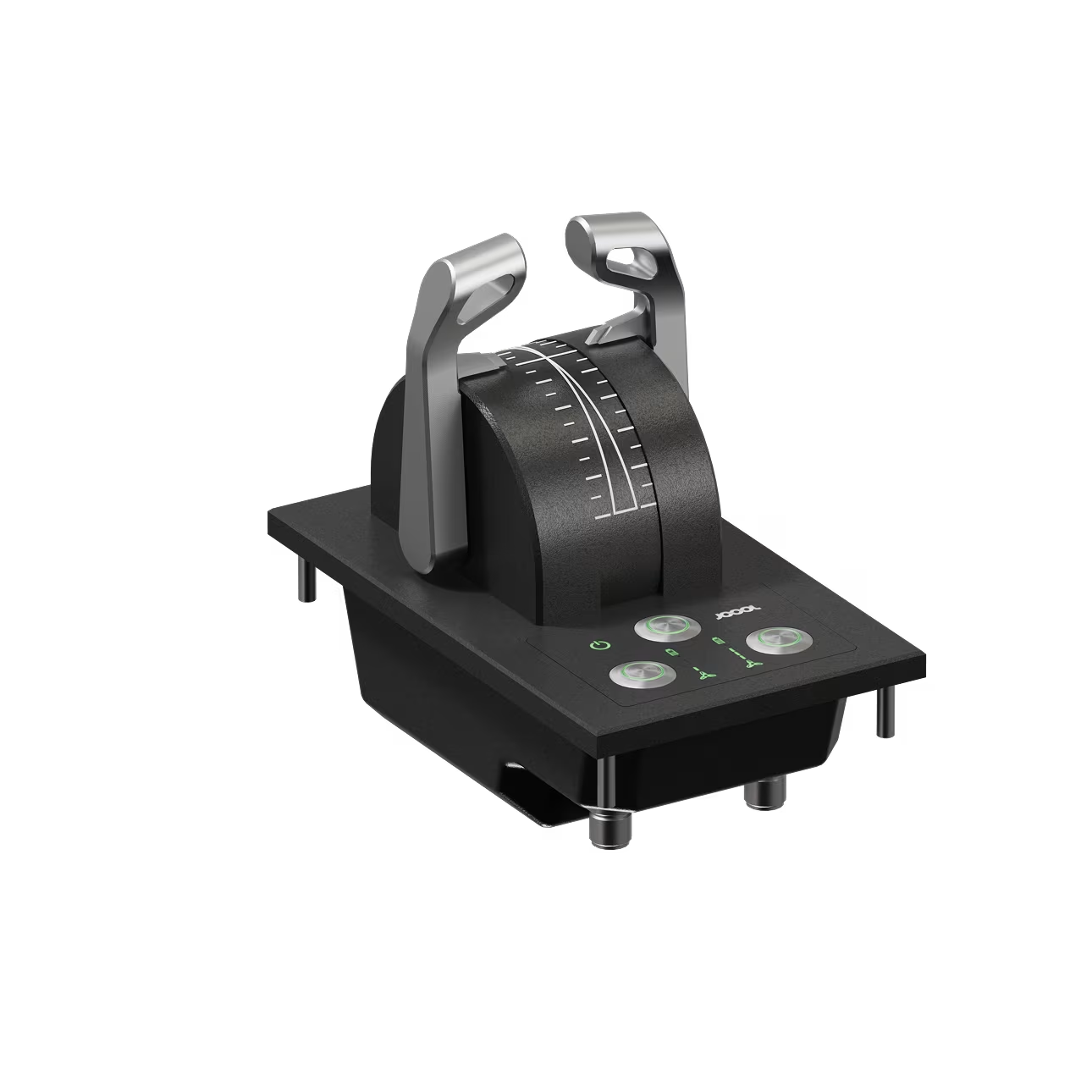
Smooth operation from startup to full thrust with a single hand
Activate regeneration mode instantly with a dedicated button
Self-adjusting potentiometer with no manual setup required
Compatible with both bridge deck and cockpit control stations
Built to resist water and harsh marine environments
Fully compatible with all OneBox Propulsion configurations
Power
Performance under sail, what electric drive adds
The performance benefit of electric drive is not limited to harbour. Under sail, the foldable propeller option eliminates prop drag entirely, the blades fold flat against the hub when not in use. On performance-oriented yachts like the RM 1380, this can add 0.3 to 0.5 knots in light airs compared to a conventional fixed propeller. In light wind conditions where a conventional yacht would start the diesel to maintain schedule, a JOOOL yacht can often sustain reasonable boat speed under sail with the propeller feathered, drawing on battery reserves for the instruments and navigation: and recovering them again when the wind returns.
QUESTIONS
Everything you want to know
In most cases, no. The differential thrust of twin PowerPods provides equivalent or superior lateral control to a bow thruster for marina manoeuvring. Most catamaran owners who transition to JOOOL report that they no longer use their bow thruster, and some new builds omit it entirely, saving weight and eliminating another maintenance item.
Identical to diesel in terms of raw thrust, the PowerPod 25 kW is equivalent to approximately 60 hp, the 50 kW to approximately 120 hp. In strong current or wind conditions, the electric system's advantage is response time: you can modulate thrust instantly and precisely, rather than managing the lag of a diesel engine spooling up to working load.
The vessel can continue under single-engine operation on the remaining pod. The EPMS detects the fault immediately and alerts the crew. Single-engine handling on a catamaran with one electric motor is comparable to single-engine diesel operation. JOOOL's worldwide service network provides support and replacement.
